It's a beautiful device, and for some reason I could watch Mr. Clickspring file brass for hours. Most of the device is clockwork – gears and bearings, so… physical manifestations of multiplication and division.
But…
The first couple of minutes of Episode 9 amaze me. There is a section where two gears with slightly offset axis are joined with a pin and slot to approximate the nonlinear angular movement of the moon caused by its elliptical orbit.
It makes one wonder about the sheer number of observations and quantity of analysis they must have done >2000 years ago to work out the motion of the moon and translate the math into bronze.
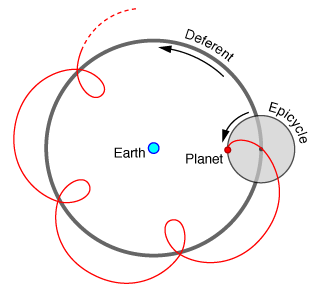
The modelling for the movement was simple: The Moon rotated on a cycle, whose center was itself rotating on a cycle centered at Earth (see [2] from [1],) but the part of the antikythera mechanism that was devised to simulate this was purely brilliant!
Every advanced ancient civilization had astronomical observatories and political leaders routinely relied upon personnel at these facilities for information about when to plant and harvest crops. If your livelihood depends on this sort of thing, there may be an incentive to invest in improving instruments and models.
The artifacts that we have found represent a small fraction of what these people produced and used. Are there going to be any iPhones (or Commodore 64’s)that will survive to thousands of years from now? If so, will future archaeologists be able to turn one on?
The problem is not that we don't have more of these devices but rather that little written remains of them. It's as if references to them were systematically destroyed. Mind you, we wouldn't even know about the Antikythera mechanism where it not for its accidental discovery.
Electron microscopes already exist today. It's impossible to predict what advances in microscopic imaging might be made in the next 3000 years, but if we assume they at least don't regress, I think there's a fair chance that a dug-up integrated circuit could be recreated in software based on an image of the die.
I love Clickspring. He's basically the single reason I use Patreon.
I have bouts of insomnia, and when I do, I found that listening to either Chris (or Bob Ross) while lying in bed help me tremendously to get calm enough to fall asleep.
“With LEGO”, rather than “by LEGO”. A remarkable achievement nonetheless, but nothing compared to the original Greek mechanism – the independently acquired celestial knowledge, mathematical ability, and the technical skill required to complete it is mind boggling given the era.
From observing comments here
on HN, it’s clear that it’s fairly common for non-native speakers of English to use “by foo” when “with foo” or “from foo” would be more appropriate.
From this and the fact that OP wrote “by Legos” and not “by LEGO”, it was simple to deduce that they meant that it was created using little interlocking plastic pieces and not by the company well-known for selling little interlocking plastic pieces.
I wonder why he cut gear teeth with a triangular file. As long as he was using a lathe and drill press, I mean. Is it just that gear cutting requires nonstandard machine tools?
He's trying to do at least one example of each type of required task with tools that would have been available at the time. Most of the gears were actually cut with a gear cutter (consisting of an electronic indexer on the headstock of a mini lathe and some Sherline lathe parts mounted on the mini lathe's cross slide, using a homemade 60° D-bit). That has included making (and using) a pump drill with various flywheels he's made from bronze he alloyed and cast himself, making drill bits and files from iron, which were then case-hardened (because steel, as such, wasn't a thing back then), along with various other plausible tools. The only place he hasn't gone is making a lathe, for which there is ample documentary evidence (by the standards of "ample" in documents from antiquity).
I have visited the old observatory in Athens, Greece. There, along other treasures (e.g. a Tycho Brahe book) there's a replica of the Antikythera mechanism.
Additionally, recently they found some kind of inscription in it [1], which describes the way that it works. What is fascinating to me is that they also fixed a bug with the periodicity of an event and wrote it down. According to the tour guide, this signifies that it was massively produced. I still find it incredibly difficult to create a new gear without modern tools and also fix a 'bug' by creating a new, better gear to replace the old one that approximates an astronomical event with better accuracy.
If it is a computer that predicts astronomical events, seasons etc. as is theorized by some, and if it was built more than 2000 years ago presumably before people understood how the solar system works (I think back then it was not understood that the planets revolve around the Sun) then they must have based the design on a large number of observations recorded over time. If so, then it is also the first application of "big data" in that an algorithm was developed based on data and implemented using a mechanical computer.
What’s really interesting for me and something I haven’t been able to find good literature on - is how the civilization seems to severely regress into the dark ages after the ancient times.
While Rome fell, Byzantium continued on. The state even continued to refer to themselves as Roman.
Certain construction items change and have good explanation, such as the Roman concrete - it’s volcanic components were no longer accessible to Byzantine builders, so the use became impractical.
But how did we manage to lose the knowledge behind the Antikythera device and why was it not recorded?
Rome itself was partly/largely to blame - the idea of a unified greco-roman culture is a myth. When thinking about ancient science and technology, its useful to divide antiquity into three periods:
the classical greek period 600-350 bce
the Hellenistic Greek period 350 - 150 bce
the 'imperial' period 150 bce - whenever ce
Virtually all of the great scientific and technical achievements of antiquity were from the Hellenistic Greek society - the society of euclid, eratosthenes, archimedes, ctesibius, hipparchus, chrysippus, herophilus, supported by the Ptolemies in north Africa.
All this scientific work came to an abrupt end around 150bce due to the roman conquests, and the political atmosphere they created. Carthage (itself a cosmopolitan center of learning with close ties to the greek world) was not he only north african city razed to its foundations by Rome. Its easier to list the survivors: (1) Alexandria and (2) Rhodes. This completes the list. And the academics didn't survive: in 145bce Ptolemy VIII persecuted the city's greek elite so all the intellectuals fled, and the romans made a hobby of enslaving greek intellectuals, to have them work as copyists and teach their children to read.
Thus in a very short span of time, virtually all of the physical books were destroyed when the cities were destroyed, and the intellectual culture that understood the ideas was eliminated. There was a partial renaissance during the Pax Romana (ptolemy, galen, etc), but the understanding of the science was much more primitive and quickly faded with no state and cultural support.
As for technology - roman engineering was typically less advanced than greek engineering, and for technically difficult things the latin writing are both crude and wrong: their scientific engineering was done by importing engineers from the east. The antikythera mechanism (late 2nd century bce) is a good example of the decline: there is nothing of comparable mechanical complexity from the roman period, neither in archeology or in Heron.
See Russo[1] for very readable up to date academic scholarship on this kind of thing.
"But how did we manage to lose the knowledge behind the Antikythera device and why was it not recorded?"
The idea that one should share ones inventions is not universal. While other wrote profusely, other ancient sages often guarded their discoveries fairly jealously.
I'm pretty sure lot of pre-20th century discoveries have been discovered several times by various people, but the surrounding society has not benefitted from their knowledge for various reasons.
An excellent example is Leonardo da Vinci. If this question irks you, I warmly suggest you read Isaacson's biography of him.
Leonardo discovered several scientific principles hundreds of years before his time, including Newton's third law, and the fluid dynamic operation of the human hearts aortic valve.
But since he never published anything, references to these were dug out only by latter day historians, and did not benefit his contemporaries.
Biomaterial Books have to copied to survive the centuries. First the knowledge has to be written down, which was not the uniform practice in pre-scientific craft guilds. Second it has to be deemed significant enough to be worth expensive paper and hand-copying. Certain classical texts were deemed significant by Christian monks and Arab scholars to preserve by copying. But many were not.
A few years back I had started outlining an alternative history scifi story with the premise being that
both the technology and the civilization behind the Antikythera Mechanism was not lost but continued to
progress up until today. Sort of like William Gibson's "The Difference engine" but with a 2000 year
head start towards the singularity.
I think there was a lost book by Archimedes that may have been about constructing these, called "on sphere-making"
It mentioned the archimedes sphere in the story
"Rehm suggested that it might possibly be the legendary Sphere of Archimedes, which Cicero had described in the first century B.C. as a kind of mechanical planetarium, capable of reproducing the movement of the sun, the moon, and the five planets that could be seen from Earth without a telescope—"
Since they had this mechanism, did they also have regular clocks with gears in ancient times?
According to Wikipedia, they only had that kind of clocks since the middle ages, but if they were building a mechanism with gears to keep track of other planets in ancient times, surely they must also have done so for local time?
One important distinction between a clock an the mechanism is that clocks can be would up and run "by themselves". Perhaps this was the missing key? (Though, this would not preclude them from creating "mills" run by wind/water to display time.
Another thing to consider is that the concept of doing things at a specific time may not have matter to much of the worlds population at the time and, even though they were capable; there was no demand.
When I think of a computer, the first thing that pops up in my mind is whether the Antikythera computer is Turing complete? The article makes no mention of this.
To give it a title as the first computing device, I think there should be some analysis of operations that it can perform and whether they can constitute as a universal turing machine.
Otherwise, we can call stones as computers. They can do addition and subtraction by the virtue of counting. I am not familiar with Turing's thesis on a theoretical basis (having only read the popular "Turing's Vision" by Chris Bernhardt), is it possible to determine turing completeness of this mechanism?
> whether the Antikythera computer is Turing complete?
Of course it isn't. Just like many analogue computers put together for the computation of ballistic trajectories or some other physical modeling task are not Turing complete. That doesn't mean they are not computers, just not general purpose computers.
By that definition the abacus is the first computer. I don’t disagree with you that Turing completeness isn’t a good definition of a computer (especially since the word itself is quite old and has been in use longer than even Babbage’s computer).
> By that definition the abacus is the first computer.
It isn't. The abacus does not compute anything at all unless used as a tool by a human that executes the algorithm. The Antikythera has its algorithm built in, it will compute the same numbers no matter who turns the crank. It's a stored program computer where the program is stored in the proportions of the gears in its gearbox.
Think of an abacus as an aid to manual computation, and a Antikythera as something that actually computes.
As others have pointed out, it is certainly not turing complete. The spectacular technical achievement of the antikythera mechanism, apart from its overall complexity, is the presence of differential gearing. Specifically, a differential turntable allows it to add or subtract angular velocities: you subtract the effect of the suns movement from the lunar movement to compute the lunar cycle.
PS Gears and cog wheels were only invented a century or two before the antikythera mechanism; scientific progress during the Hellenistic era was very rapid! Then the decline after the roman conquest was quite rapid as well - by the imperial period (eg Heron's writings) techniques like differential gears had already been lost, and they wouldn't be reinvented till (i think?) the 18th century!
No, Turing complete means that whatever we are talking about can solve all the problems that a Turing machine can solve. A language that has only jump statements and absolutely nothing else is not Turing complete even though its programs can run forever.
We only equate running forever with Turing completeness in contexts where something would be Turing complete iff it did not miss an instruction or something that would allow it to run forever (consider a language that has addition, subtraction, if statements, etc but no jump or function) or if it has something that does not allow it to run forever (such as a type system, consider simply typed lambda calculus).
Our modern computers do not have unbounded tape nor are they infinite state machines - with their limited memory and finite amount of states they can't solve all the problems that a Turing machine can. They are basically glorified finite state machines with a lot of states.
No, infinity is an actual requirement... there's no way to run out of stack space on an infinite machine, so there's no limit to the depth of recursion.
It depends on how "computer" is defined. Being there is a wide range of mechanical devices that can count and/or "execute" formulas based on variables/parameters, the boundary is pretty fuzzy.
But "Turing Complete" is relatively clear cut. To make a long story short, it means it has the equivalent of IF statements and loops. The first such device proposed is probably one of Charles Babbage's devices, which he was never able to complete. The first known to be actually completed is the German electromechanical "Z3" by Konrad Zuse in the early 1940's. In theory you could run Windows programs on both devices; IF you have tons of patience, storage tape, and time. (And want to build an x86 emulator for them.)
Thanks for the insight. I think it is the concept that is so very appealing that if a machine is turing complete, it can solve any problem that any other turing machine can solve (just takes longer or needs more memory).
It elevates the machine to a common capability level that can solve any computable problem. Therefore, it is important to understand turing completeness.
I tend to think of the Antikythera mechanism as a calculator as opposed to a computer. I save the term computer for things that are Turning complete (ignoring physical limits). Thus, computers have features like branching and looping. Calculators generally lack these features or have them in very restricted forms. By this definition, which I grant is somewhat arbitrary, the Antikythera mechanism is a calculator.
b.) I wish people today would stop thinking people back then war "stupid", people have the same intelligence for the last 10k years and the same thought processes (e.g. when reading Sumerian texts) but not the same tools or knowledge. So someone from old Greece would come up to speed very fast and then make inventions in our time frame based on our knowledge. You could argue with him the same way you can argue with todays scientist.


https://www.youtube.com/playlist?list=PLZioPDnFPNsHnyxfygxA0...