"And now, weak, short of breath, my once-firm muscles melted away by cancer, I find my thoughts, increasingly, not on the supernatural or spiritual, but on what is meant by living a good and worthwhile life — achieving a sense of peace within oneself. I find my thoughts drifting to the Sabbath, the day of rest, the seventh day of the week, and perhaps the seventh day of one’s life as well, when one can feel that one’s work is done, and one may, in good conscience, rest.”
Not to be overly picky, but the three stars visible thing is when Shabbat ends on Saturday night, not when it begins.
The start of Shabbat strictly speaking is when the sun dips below the horizon and is commemorated by the lighting of two shabbat candles.
The last time for lighting those candles is 18 minutes prior to the astronomical event of sun-below-horizon, which under rabbinical interpretation is the true beginning of shabbat (that is, the last minute during which "work" -- in the technical, term of art sense -- may be performed without sanction).
It's a key event in Jewish ritual and not surprisingly there's a ton of commentary and meaning-making that has attached to how, when, where, and why Shabbat observance is undertaken. It is said that "More than the Jews have kept Shabbat, Shabbat has kept the Jews."
Thank you, Mark for defending me. Nothing bothers me more than when Silicon Valley geeks try to take Jewish law and twist it to fit their new-age mumbo jumbo.
How? I was under the impression that spirit means the idea of a noncorporial essence that survives the body. I wonder what leap you're making to get there from here.
If anything I think his books are his distributed essence, worming their way into the collective unconscious, and collective conscious.
Sacks was clearly a great doctor in many ways. But he'll probably be better known, and remembered, for popularizing science and medicine in a way that we rarely see: He describes people's symptoms carefully, but also sympathetically. He treats patients using science, which is supposed to be dispassionate, but does so with what's obviously a great deal of care. And he reveals science to us, not as a cold set of rules that govern the world, but as something that provides us with an infinitely large number of wondrous, almost miraculous, combinations of events.
Sacks articulated -- perhaps not explicitly -- that science isn't merely reductionist, cold, logical, and unemotional. He loved learning new things, and was clearly overjoyed to learn, understand, and appreciate the amazing universe in which we live.
It has been many years since I read, "The Man Who Mistook His Wife for a Hat," but I remember loving every page. His later books aren't as famous, but his writing continued to be enchanting and inviting, even when the subjects weren't necessarily my cup of tea.
We in Western societies tend to shut down discussions of death, and what it means. The writing that Sacks produced over the last year have been some of the most poignant, chilling, and inspiring essays that he produced. It's sad that he's gone, but I'm grateful that he shared so much of his work, and his life (and ultimately death) with all of us.
> The writing that Sacks produced over the last year have been some of the most poignant, chilling, and inspiring essays that he produced. It's sad that he's gone, but I'm grateful that he shared so much of his work, and his life (and ultimately death) with all of us.
I'd like to read it. Which pieces are you referring to (besides the Sabbath piece, which I've read)?
“My religion is nature. That’s what arouses those feelings of wonder and mysticism and gratitude in me.” -- Oliver Sacks
Oliver now gets to take all the elements he borrowed, and that he loved so dearly, and return them back to the stars from which they came. His spirit has dissolved now into it's new form as a complex abstract of memories, ideas, and collective appreciation, where it will now live alongside nature; it's original muse and creator.
It's sad to hear that he died. I just started reading his book, "The Man Who Mistook His Wife for a Hat". It's an extremely interesting book about the case stories of some of his most interesting patients. The book gives a lot of insight into the lives of patients with the strangest brain dysfunctions, and puts into perspective many of the things we take for granted, such as how we recognize facial expressions, our own body and more. I'd definitely recommend it to anyone who's interested in neuroscience or even artificial intelligence.
I recommend [1] as well where radiolab basically says goodbye to him and he tells his life story. That one hit me so hard because he obviously went out with his full mental capacity, leaving an even bigger gap.
A great loss, made no less shocking for all its foreshadowing due to his illness. The knowledge he shared through his work and his books have had a lasting impact on my life and the lives of others. Would that we all leave such a legacy.
He contibuted more to literature, if it can be called that, than to neurology. His writings were akin to the breathless articles in Wired on the "AMAZING DIGITAL FUTURE".
If you want to read real neurology, as opposed to the neurology case studies for the unwashed masses that Sacks churned out, Lord Brain's Diseases of the Nervous System ( now in the 12th edition ) is a classic. http://oxfordmedicine.com/view/10.1093/med/9780198569381.001...


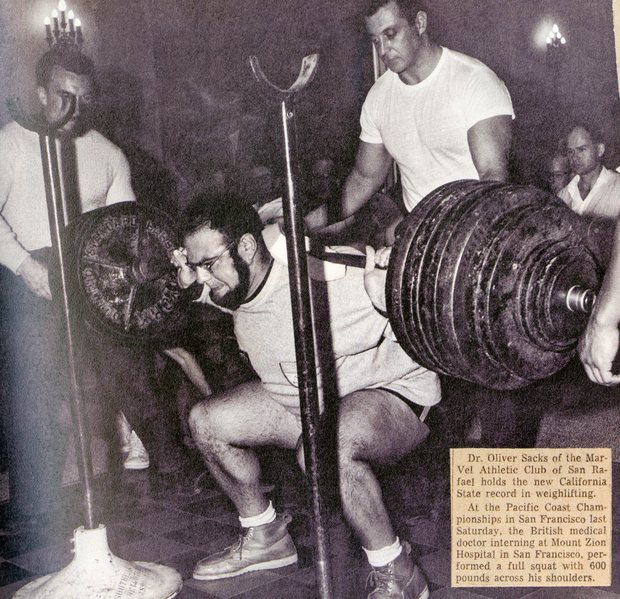
"And now, weak, short of breath, my once-firm muscles melted away by cancer, I find my thoughts, increasingly, not on the supernatural or spiritual, but on what is meant by living a good and worthwhile life — achieving a sense of peace within oneself. I find my thoughts drifting to the Sabbath, the day of rest, the seventh day of the week, and perhaps the seventh day of one’s life as well, when one can feel that one’s work is done, and one may, in good conscience, rest.”