I was the first corporate web master for AltaVista and joined in January 1996 to manage everything except for the actual search engine itself.
It was my first real job at a large company and taught me a lot about working in corporate America.
I saw so many mistakes made within the year I worked there that were obvious even at the time for a lot of us that worked there, but at the same time there are many similarities to what happens with other very well funded projects trying to make sense of a new technology and way of doing businesses within a large very important company with a very different business model.
I have seen virtually the exact same playbook happen in the enterprise blockchain space in multiple occasions over the last 5 years.
It is sad in many ways to see what happened to DEC (probably more so than AltaVista). It was such an innovative company back in the 60s and 70s, but unlike IBM weren't able to reinvent themselves in first the new 80s world of PCs and then later internet. Classic case of innovators dilemma.
AltaVista itself largely died, because in a misguided attempt to manage the innovators dilemma they just tried to rebrand everything network oriented they had as AltaVista.
People only remember the search engine now and for good reason. But we had AltaVista firewalls, gigabit routers, network cards, mail server (both SMTP and X400 (!!!) and a bunch of other junk without a coherent strategy. Everything that had anything to do with networking got the AltaVista logo on it.
The focus became on selling their existing junk using the now hip AltaVista brand, but the AltaVista search itself was not given priority.
I learnt a lot from my experience there, grew to be extremely skeptical, learnt to love Dilbert and also learnt how cool the DEC Hardware and Digital Unix was compared to the Sun Sparc and Solaris stuff I had to work on afterwards.
Anyone familiar with Inverted Text Indexes when AltaVista was at its peak appreciated DEC's business model and execution. Google's PageRank pulled the rug out from under standard Inverted Text Indexes and quickly obsoleted the competition. Re-ordering the entire index nightly with potentially multiple passes is non-trivial and requires throwing a lot of hardware at the problem.
In my opinion, marketing wasn't the problem; the problem was fast-following a disruptive technology without understanding how it worked. Once details of PageRank were published it was too late.
Why was it too late? They were still number one when pagerank was published, all they needed to do was put more resources into it. Google’s algorithms weren’t magic. The biggest problem was lack of vision, and willingness to bet on that vision. Investors in Google were swinging for the fences, that mentality would never have been at home at DEC.
Google’s algorithms were definitely “magic” by the standards of the time. Altavista never got much better than literal keyword search even when they introduced PageRank-style weighting. Google immediately had useful results from misspellings, questions, and related keywords, and only got better from there. Plus it was much faster; responses in 1-2 seconds versus 5-10 sometimes for AV. Maybe what you said is true, but they were deep in the hole as soon as Google launched.
I don't recall AltaVista's response time as slow (although I was impressed by Google's fast response time, which they proudly reported then). It was the page-load time, which was slow for AltaVista compared to the one of Google, which initially drove me away once that alternative was available.
Yeah, all portal sites were cluttered heavily. Google was only the logo, the search input field, and the submit button. That was one of the biggest advantages for me.
True, and Google is slowly being disrupted by the next generation of Internet search (looks like disruption happens every 20 years or so).
The age where "search" is meant to return pages will eventually end. I know it's early, but you can think of GPT-3 as the next generation of search engines. You consume the entire "Internet knowledge", and you answer questions, by merging information from multiple sources. Not just returning one existing page. That's sort of what GPT-3 does, you just don't think of it as a search engine yet.
Google felt "magic" in 2000. A search-oriented GPT-3 will feel "magic" soon.
GPT-3 will be remembered and used by no one in no time. Google is already answering questions to queries and also offering alternative queries. It's now in a hybrid state where it tries to answer your stuff but also provide links. Quite interesting and quite usable already. GPT-3 is a cute experiment, nothing more.
The lists of questions that Google returns as snippets can be seen as possible elements of a paragraph for a process that doesn't quite know what a paragraph is. Clicking on them acts as a survey response, a signal for that element of information's significance in the topic for which you searched.
> Google is slowly being disrupted by the next generation of Internet search
What is the name of the search service (or services?) that are better than Google? You make such big statements and provide zero examples.
Bing is inferior to Google; duckduckgo is even worse - the search is often unreliable (even after years of work); Tineye got hindered by GDPR and it was search via picture anyway. So what else have we got there?
I remember the time when Google came out very well. It was a strictly better product than Altavista. Once you started using Google you would never go back to Altavista - the difference was like night and day. Altavista was dead for you. There were no obstacles to switch either.
I assume that if a new product came today, that was better, even say 25% better, people would start switching via word of mouth.
Back in the day Altavista lost because their technology was inferior. It wasnt about website design (although Google's clean landing page helped), it was 100% technology: Google was strictly better. In fact at that time there were other search service too - they were even worse - and often provided nearly random results (e.g. search for William Shakespeare -> get random porn website...).
PageRank algorithm sounds easy once you know it, but it is easy once someone tells you about it. It is much more difficult to invent. Back in the day many other people worked on improving search (those were the times of catalogs and webrings) and Google were the first (?) to come up with something like that. PageRank was basically bleeding edge research sponsored by spy agencies. It only sounds easy with the benefit of hindsight.
Also not directly to you, but the opening poster basically writes that:
* they could make Altavista work - but the meddling management hidnered it (how? did they have their own PageRank equivalent? I doubt it)
* they could have made blockchain work - but the meddling management hidnered it
I see a certain Scooby doo pattern. And a senior developer/manager/architect (with 20++ years of experience under their belt) who claims that they could make blockchain work, while most people with such experience know that blockchain is an empty buzzword.
all of search isn't question/fact based. I'd love to see the real numbers, but I'd think that less than a third of all searches are suited for a factual question answer system.
Google search is still largely based on human feedback. what people link to, what terms they choose to use in relation to other terms. It will be difficult to disrupt that
does the Ad business model work with GPT-3 answer ?
Isn't the point of google to make it 'confusing' enough to the point that I will click on the ad because it's clearer ?
How GPT-3 search-oriented answer would help with that ?
Google was inferior to AltaVista for quite some time.
According to Wikipedia: "In 2000, AltaVista was used by 17.7% of Internet users while Google was only used by 7% of Internet users, according to Media Metrix."
So, two years after official founding, Google was still not ahead to AltaVista.
AltaVista even had a "visual clustering" thing that used Java (which would work great now with Javascript) that would allow you to refine your searches. I still cry that we don't have the equivalent of that 25 years later.
Then AltaVista got caught in the great DEC "hostile giveaway". Which left Google sitting in the right place with nobody to really compete against them.
One problem was that AltaVista was early--it basically predated common people using the web--and so it wasn't quite so clear how you monetized it. DEC effectively ran it as a goodwill "free service" to the internet. Even in 1999, on-line commerce wasn't very big. Remember, the big AOL/Time-Warner merger was in 2000.
The one thing that Google got right was timing. Google was in the right place when everybody switched from services like AOL to basically just accessing the web directly. And this let them put ads in the search which could be used for monetization.
(Also, an aside it's possible for it to be totally true too)
Early Google users definitely trended towards power users, and if the average early Google user made 3x as many queries as the average Altavista user, Google would have higher actual query volume.
The publishing of the PageRank algorithm was the wrong milestone; my bad. The important milestone was a less well-defined point when search engine users and competitors realized that Google was disruptive.
PageRank was the way forward but the true schlep, in the Paul Graham sense [1], was the brute force continuous hardware scaling required to keep up with the growth of the Internet. DEC needed a technical pivot first and foremost. I've seen no evidence that the AltaVista team understood the technical challenge but I could be easily convinced that bean counters and/or management stifled a promising response; absence of evidence is not evidence of absence.
My recollection from the time (I didn't work at either place but was in the general area) was that everyone assumed Google were delivering their performance by use of massive hardware resources (I heard 70K machines at the time). So perhaps AV folks just couldn't imagine getting the hardware budget to complete effectively?
It's also worthwhile I think to point out that at that time, it wasn't settled that "search engines" as we know them today (like Google) were _the_ way to use the Internet. There were alternatives such as Yahoo (curated directory), and browser-side catalogs (netscape.com home page) that were much more popular. So it is possible also that AV folks weren't exactly thinking "We have to light the afterburners to go after Google in this immensely important internet search space". They might have been thinking "odd, someone spent $xxxM on hardware to run a search engine, that'll never work out".
WRT to curated directories, in the late 90s when Google came (along with others like Northern Light), it was clear that both directories (Yahoo and Moz in particular) and the established search providers (Yahoo, AltaVista, Metacrawler, etc.) were being overwhelmed.
Yahoo (aka Inktomi) search frequently took multiple pages of to find anything of quality. Curated directories were missing quite a bit. Furthermore, if I remember correctly there was some sort of payola scandal around Moz/OpenDirectory editors.
The market was primed for a better solution, and PageRank provided it.
Inktomi was pretty good then. In fact they powered both Yahoo and Microsoft web search at the time. When they were acquired by Yahoo, they formed the basis of Yahoo search, that was well respected in the search research community for years until Yahoo started to implode.
Early Google used commodity hardware to the point of being comical. Somewhere there is a "historical" display of commodity motherboards spread out on cork trays in a rack. Maximizing density/minimizing cost.
The ability to scale in this way with commodity hardware was new and important.
When Google published PageRank in 1998, they didn't publish MapReduce, the framework required to do coordinate large distributed computations, until 2004. By then, AltaVista was dead.
If AltaVista had thrown resources at the problem using any of the then widely known techniques for scaling, they would have been constantly dead in the water.
What made me switch to Google from AV was the simplicity of the Google home page and the clean results page. AV was getting too cluttered, Google loaded faster. (We were still on dial-up too!)
The funny thing is that I remember AltaVista being much cleaner than Yahoo and the other competitors at the time. I think they only switched to the cluttered page to try keep up with the trends. Then Google came along and rolled it all back to basics. (Of course the better results helped too.)
> It was such an innovative company back in the 60s and 70s, but unlike IBM weren't able to reinvent themselves in first the new 80s world of PCs and then later internet. Classic case of innovators dilemma.
No, this wasn't it. DEC actually had a quite good PC business which died when everybody died to the Asian manufacturers.
DEC also had plenty of technical stuff as well as cash flow to ride it out.
DEC was purely a result of executive level and board level malfeasance.
After the board forced the founder Ken Olsen (who wasn't a great CEO but actually did have vision) out, Robert Palmer (who had no vision AND was incompetent) (and not the singer--the singer probably would have been better as CEO) was given marching orders to sell off the company. Which he did--with no vision whatsoever. Lots of people tried to fight against it, but any division which started righting itself immediately got flogged off.
The patent lawsuit allowed DEC to jettison a bunch of the fab to Intel which then made them an attractive target to Compaq.
People love to comment that the merger killed COMPAQ when the reality was the entire US domestic PC industry was completely collapsing.
HOWEVER, to give you an idea as to how badly the "hostile giveaway" was managed, Compaq effectively bought DEC for less than their enterprise service annual revenue--about $2 billion per year. HP later milked this stream for more than a decade.
So, in the middle of a PC industry collapse, no executive could figure out how to convert a $2 billion annual revenue stream for enterprise services plus a whole bunch of leading edge technology into a profitable company.
This shows just how shit-tastic the executive management for both DEC and COMPAQ really were.
But, hey, the DEC board got their stock bump and cashed out.
I read your comment a few times and didn't understand what had happened at all. I figured it all hinged on the term innovator's dilemma, since you used it a few times. So I looked it up.
Wow. Mind blown.
I think we're all familiar with disruption, but Innovator's Dilemma poses a theory or framework as to why it happens. It's rather brilliant and seems to fit every case of market disruption I can think of.
Incumbents serve existing markets and don't care about the small markets served by disruptive startups. They're making small, iterative improvements to their product.
Disruptive tech eventually hits parabolic improvement and by this time the incumbent can't catch up.
To be fair even google and early investors in google including myself ( 2005 post IPO ) didn't understand how lucrative and important being a dominant search play would be.
It won because competition was really bad. Altavista was not a good search engine.
When you were looking for something, you had to use multiple tools, like Lycos, Hot Bot, Ask Jeeves and the multitude of the web portals that were available back then.
I remember when I first saw Google, it was an instant decision and I never went back, that much was the difference in quality. Unfortunately for us, nobody found a working business model into search in time and this allowed Google to become too big for any viable competition.
The problem is that how the market works is that once a monopoly has been established, that it's very hard for a competitor to challenge that, even if he have a better idea.
Large players make lesser costs due to large vertical integration and bulk discounts.
Even if I were to invent a new search algorithm that would be superior to Google's in terms of satisfaction with most searchers, I would be unable to get a wedge in.
This is not so big a problem with say a power company, but with a search engine, it becomes the front page of the internet through which everyone goes — the end result is that Google commands a great deal of political influence simply with how it decides that it's algorithms should work and what pages to prioritize.
Courts ordered Microsoft in the past to provide Windows users with notice of other web browsers, which was the primary way Internet Explorer lost it's dominance — perhaps it is time to order Google to provide users notice of other search engines and web browsers too as a matter of antitrust.
thanks for posting this. I love when HN brings together the principal actors and primary sources. OT: I wish we could use webmaster more often, even though thats a much murkier proposition in the days of product managers deploying the new site via CDeployment.
I was in Nassau working between FSG/PM and the ACA/CORBA team. Recall many trips to the WRL, they always had the coolest stuff; network tunnels and firefly. Back then who you hated said a great deal and I recall several other CEs playing the silver bullet game to perfection.
I'm curious the relation to the corporate blockchain?
>> I'm curious the relation to the corporate blockchain?
I think its the idea of companies seeing new tech and trying to leverage it somehow in their own businesses and failing - badly.
Here's my own anecdotal evidence with blockchain:
I work in a very large health care company. For about four months, there was a huge buzz around the company about how to leverage block chain in health care. The main idea was using block chain to manage patient accounts and PPE.
We had all the execs bring in to do huge presentations. They brought in people from IBM to talk about Hyperledger and other block chain companies. They posted videos and articles about how this going to transform healthcare, we were all told this was going to be huge. They told people they were going to form a new team, hire developers and this was a going to be a huge focus in 2020.
Six months later? You couldn't find a single resource on any of it on any of the internal company sites. All the presentations stopped, the execs stopped talking about block chain seemingly over night and it was like poof! the idea of block chain, or any mention of it or the "revolution" that supposed to follow? Completely disappeared into the abyss, never to be heard from again.
I have no idea how much they sank into the notion that block chain could be used for health care, or how many people they hired or the contracts they signed with IBM, but I can only assume they lost a lot of money before they finally realized it wasn't going to work out.
As I understand it, the main reason to use blockchain is having multiple parties intact without any party being trusted, so if you do have some central trusted authority it's pointless. There's also the requirement that the network has enough participants that no single party can gain a majority of the network's compute power, which seems a very iffy assumption with private/permissioned blockchains.
So I don't see how blockchain is useful in a healthcare context. Please correct me if I'm wrong and enlightenen me if I'm missing something.
> They should have merged with a PC make obviously.
DEC was acquired by Compaq [1]:
> In 1998, Compaq acquired Digital Equipment Corporation for a then-industry record of US$9 billion. The merger made Compaq, at the time, the world's second largest computer maker in the world in terms of revenue behind IBM.
I took it to be sarcastic. It was a spectacular fail as within about a year of the acquisition everything good they were doing had completely disappeared from view never to be seen again. That's not to say that DEC could have done any better on their own: with the absolute market dominance of Wintel at the time, they were flaming out as so many other mini and workstation companies did as their markets evaporated.
Git blame is one of the best tools for understanding the history and archeology of a large legacy code base.
There is nothing worse when you're trying to do solve some problem that you discover a giant reformatting commit typically instituted by a youngish developer.
It obviously doesn't remove the history, it just makes it so much harder to actually find out why the code was written as is.
It explains the reasons why the community should not do this. Also the community has generally updated and followed whatever the "leadership" has done so far and for good reason.
If the "leadership" decides to go this way as it appears they do, the community will likely follow them as they have done in the past.
This is a big test for Ethereum. The DAO holders were warned clearly about these kind of issues before hand, yet some sort of collective mania made very smart people go deaf.
Very cool. I'm a lisp programmer now, but this reminded me that as a teenager I was learning how to do games programming on my C64 using an incredible Forth compiler and games framework called White Lightening.
There was also a BASIC version of Lightning. I never had the Forth version, but played around with the BASIC variant.
BASIC implementations of everything in that Youtube video came with it, and it had funky things like pre-emptively multitasking for BASIC programs (fairly simple - just use an interrupt or hook into one of the BASIC entrypoints and count time slices and shift some pointers around) + separate programmable sprite animations (so you e.g. could start sliding a sprite over the screen and let your BASIC program keep doing other stuff
We implemented the first USSD bitcoin wallet in Kenya a couple of years ago.
USSD as a technology is good, but the biggest problem is access to the networks. If you think its hard dealing with App Stores you haven't tried dealing with MTOs.
In some countries you can deploy it nationwide, but in many in particular developing countries you need to make deals with every single MTO.
If they think you are competing with one of their services such as Mobile Money they will not let you on their network. In many other cases you will need to have a physical server in their server room.
The official money man behind the project Wang Jing lost a huge chunk of his fortune after the Chinese stock crash. The Nicaraguan government says it won't affect the project. But most people I talk to down here think the success of the project as being more doubtful than ever now.
There are so many conspiracy theories about the project. One of them is that it's secretly being funded by the Chinese government with Wang Jing only being a front. This doesn't make much sense to me as the Chinese government is already pretty well invested in the Panama Canal operation, but who knows.
I live in Nicaragua. While this is strictly speaking corruption, it is a very democratic form of corruption. In the US corruption is a sport mainly enjoyed by the rich.
I like the term malleable as it describes it much better than the black and white world of corrupt or not.
Here in Nicaragua it is part of what makes the country work and prices are at a level that most people can be part of it.
Living police salaries are luxuries for rich countries. Nicaraguan police are pretty honest and effective, just look at our crime rates that are well below the region.
If they charge someone an "on the spot" negotiable fine it is something most people accept as long as it's not outrageous. Is it ideal? No. But it's probably better than most other alternatives for a country at this level of economic development.
"While this is strictly speaking corruption, it is a very democratic form of corruption."
If the police are for sale, then they are for sale to the highest bidder. If the prices seem reasonable to you, it's only because your aren't being outbid by someone significantly wealthier.
"just look at our crime rates that are well below the region."
Crime is lower. The few gangs that are here don't really spread outside their barrios like they do in just about every other country in Central America.
You say: "If the prices seem reasonable to you, it's only because your aren't being outbid by someone significantly wealthier."
Thats not what Nicaragua is like. It's not the wild west. It's a pretty quiet traditional country with a fair amount of trust. Again compared to other countries in the region, not with say Denmark or Sweden.
There was recently a police killing of an innocent family in a botched drug raid. It became a really big deal and the police, president bowed over to try to make things better. Not that that excuses things, but it's a hell of a lot better than what happens in the US.
It is very difficult to view normal life in the second poorest country in the western hemisphere with the moral compass or glasses of middle-class US. Things are very different here.
>It is very difficult to view normal life in the second poorest country in the western hemisphere with the moral compass or glasses of middle-class US. Things are very different here.
Perhaps. But tolerance of "low-level" corruption is one of those things which causes Nigaragua to be the second-poorest country in the western hemisphere. The values of the middle-class US are a big part part of what made the US the richest country in the western hemisphere.
There are many things that keeps Nicaragua poor, this is hardly the most important one. Similar low level corruption is found all over Latin America except for perhaps Chile. It disappears once countries have been middle class for a while.
How does one square "Nicaraguan police are pretty honest" with "they regularly pocket cash bribes to not enforce the laws, because living police salaries are luxuries for rich countries"?
It doesn't seem like a terrible system in practice, but it sure doesn't seem remotely "honest".
It is said often that the police in many cities in the US are mainly focused on revenue generation. Whether this is true or not I don't know. But if it is, it is no more honest than when a police officer earning $250/m asks $4 for an on the spot fine instead of the $20 and half a day lost trying to pay it officially.
What is your take on the canal? Its pretty clear that the Panama canal provides a lot of economic value for Panama (from tourism to transit fees). Do you think the country as a whole sees it as a good thing? bad thing? just another thing?
If they succeed in building it, it will no doubt have a strong economic effect on the country.
Right now there is a lot of tourist investment in the same area that the he mentions in the article. An ecological disaster could hurt the growth in that area, but it might open up the whole Caribbean coast of Nicaragua, which is very difficult to get to now.
Most educated people here are doubtful about the success of it. The majority of the country is not very well educated and buy most of the Sandinista propaganda about the canal. The main exception are poor farmers in the affected areas who have been demonstrating against it.
Nicaraguans are normally very open to foreigners, but even I've heard many mostly poor people worried by the headlines of 10,000 Chinese workers being needed.
I've heard from people from countries like this where someone involved in say a vehicular manslaughter incident/DWI, can make the incident "go away" with a bit of money. I don't mean going thru courts or civil judgements, I mean, simply making the case go away altogether.
I lived on the Danish island of Bornholm in the middle of the Baltic in the 80s. The island is basically surrounded by mustard gas dumping grounds. Back then many local fishermen were seriously wounded by accidentally pulling mustard gas bombs up in their nets.


It was my first real job at a large company and taught me a lot about working in corporate America.
I saw so many mistakes made within the year I worked there that were obvious even at the time for a lot of us that worked there, but at the same time there are many similarities to what happens with other very well funded projects trying to make sense of a new technology and way of doing businesses within a large very important company with a very different business model.
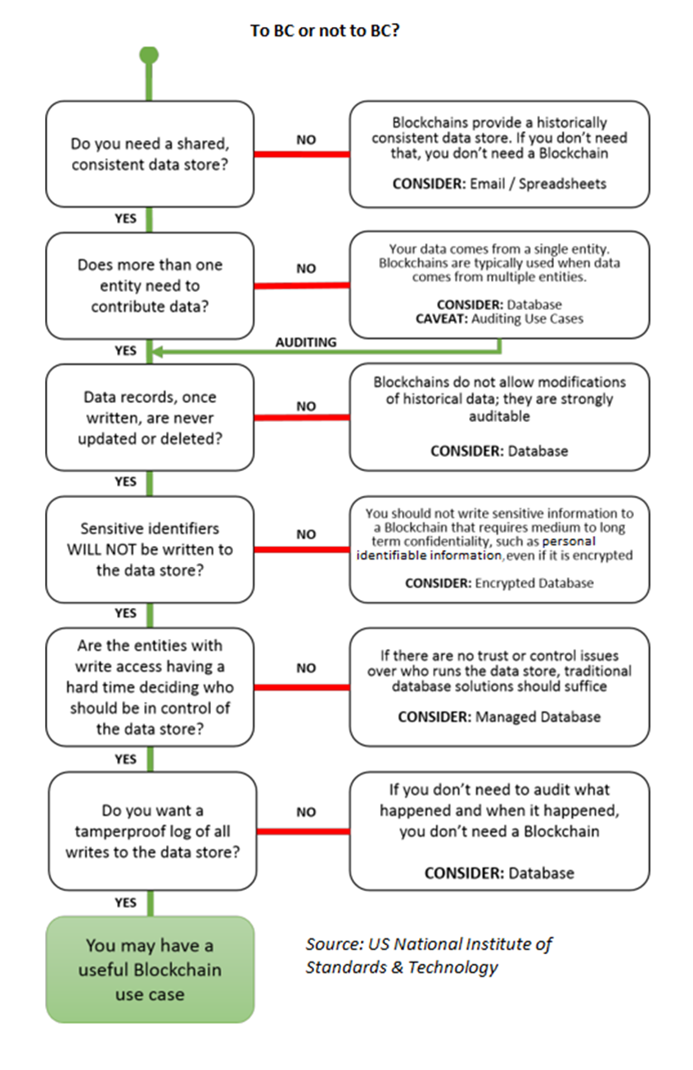
I have seen virtually the exact same playbook happen in the enterprise blockchain space in multiple occasions over the last 5 years.
It is sad in many ways to see what happened to DEC (probably more so than AltaVista). It was such an innovative company back in the 60s and 70s, but unlike IBM weren't able to reinvent themselves in first the new 80s world of PCs and then later internet. Classic case of innovators dilemma.
AltaVista itself largely died, because in a misguided attempt to manage the innovators dilemma they just tried to rebrand everything network oriented they had as AltaVista.
People only remember the search engine now and for good reason. But we had AltaVista firewalls, gigabit routers, network cards, mail server (both SMTP and X400 (!!!) and a bunch of other junk without a coherent strategy. Everything that had anything to do with networking got the AltaVista logo on it.
The focus became on selling their existing junk using the now hip AltaVista brand, but the AltaVista search itself was not given priority.
I learnt a lot from my experience there, grew to be extremely skeptical, learnt to love Dilbert and also learnt how cool the DEC Hardware and Digital Unix was compared to the Sun Sparc and Solaris stuff I had to work on afterwards.